#1. You [with soft tone]: ‘Sorry I’m late for the movie, I thought you said it started at 7 not 6. And the traffic was terrible.’
Me: ‘ I feel pretty annoyed you’re so late, but I guess we can see the 8pm session, or just go home? Maybe we need to check in re the exact movie time on the actual day, so this doesn’t happen again?’
You: ‘I’m so sorry darlin, I felt really bad when I realised I was letting you down. Let’s see the 8pm, and I’ll buy the popcorn. Hug me for a moment first though.’
This is a ‘bread & butter’ misunderstanding and reaction (i.e. just an everyday disagreement). The exchange is clear: You made a genuine mistake, and have owned it, apologised, and given the injured party the power to decide what happens next. Both of you decided to reassure the other that they were still important and cared about, despite the mix-up. Plus long hugs are calming.
#2. You [in brusque tone]: ‘Sorry I’m late for the movie, I thought you said it started at 7 not 6. And the traffic was terrible.’
Me: ‘This is the 4th time you’ve been late in a week. FFS, you always do this! I thought you were either dead in a car accident, or just being the worst partner ever.’
You: ‘God, calm down, you’re such an uptight drama queen. It’s only a film!”
Me: ‘I’m fuming. I don’t even want to see a film now; in fact, I don’t even wannna really see you anymore this evening!’
You: ‘Yeah, I’m not in the mood for crap like this either now! I’ll just text you in a couple of days; I don’t need this hassle.’
This has become a ‘fight/flight/freeze’ situation, not because the circumstances really warrant it, but because both parties have had their attachment systems triggered. That means that their deepest programmed survival instincts of avoiding Negativity (specifically abandonment and rejection) are surging through their bodies, in the form of adrenaline and cortisol. It’s an Argument. And biologically, it feels like a fight to the death.
The latest neuroscience research on how our bodies behave when we’re in love or fighting is fascinating; it’s easy to get obsessed researching this topic. There are practical articles, like this one for example: Neuroscience tips to remain calm in an argument HERE (Focus on the other person/don’t yell/keep body posture neutral/Breathe deep/exit the argument earlier rather than later).
Elsewhere there are clear principles to follow for resolving conflict:
- Show basic concern for the other’s well being
- Maintain focus on the specific problem at hand
- Refrain from generalizing the conflict
- Be willing to engage
- Effectively communicate feelings and needs
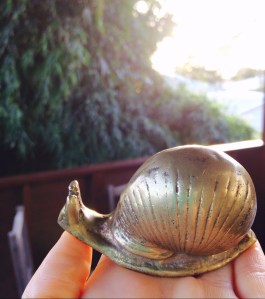
But NONE of this helped me when I was disagreeing with H last week HERE! I saw it unravelling before my eyes (we were Face-timing), and could feel my body getting stressed and elevated, but it just happened so fast… Plus, I could see it was happening to both of us… We were losing our playful, sweet, creative Snail & Crab connection…
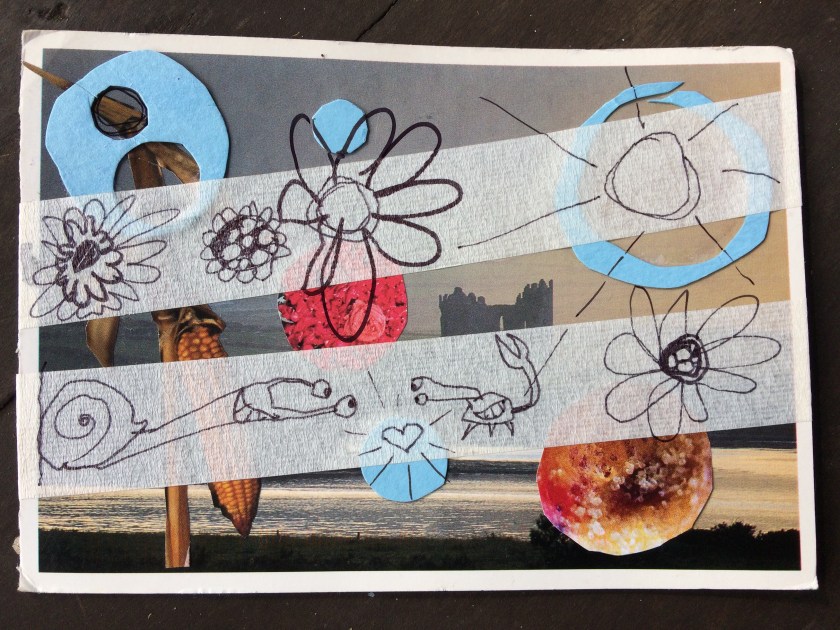
Upcycled postcard by H ©bone&silver
In adult relationships and arguments, as soon as one or other of you ‘flips your lid’, you’ve lost access to the pre-frontal cortex of your brain, which controls the limbic system. This means you are literally flooded with adrenaline (causing the fight/flight/freeze sensation I mentioned before), while all capacity for compassion, mindfulness, and kindness to Self & Other flies out the window.
All we can do is practise our awareness (easier written than done when discussing chores vs social life with a teenager who goes from 2/10 reactions to 10/10 in a microsecond for example). But ask yourself how your parents fought, and how you fought with each of them?
For most of us, it’s a blend of voice raising, sulking, removal of privileges, or delayed discussions once everything’s calmed down. Other people were yelled at, insulted, shoved or even hit. Some mothers withdrew, while others wept. Some parents drank, threw furniture, or seethed in silent white fury; others were basically absent, either emotionally or literally. The full spectrum happens, and it all has a profound effect on how we disagree & argue.
It’s worth remembering too that we have an inbuilt survival bias toward the negative: typically it takes 5-10 positive interactions to overcome 1 negative one. So every fight with your caregiver (when young), or beloved (when older), can create a deeply unsettling state of arousal (and I don’t mean the good, sexy kind).
I felt ‘H’ and I tiptoeing back towards our ‘togetherness’ slowly HERE. We texted, emailed, and talked on the phone. A long, quiet hug would have been AWESOME. Nothing like it for calming the nervous system [5 more sleeps till we get one!].
Long-distance dating can be tough, but I’d rather share my bread & butter with H than anyone else, and we simply have to practise all the other less fun stuff too.
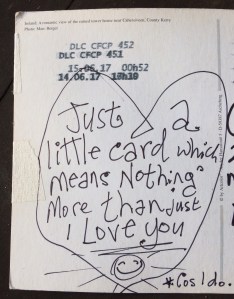
Thanks H x
How you respond to the issue… is the issue. Frankie Perez















 bone&silver